


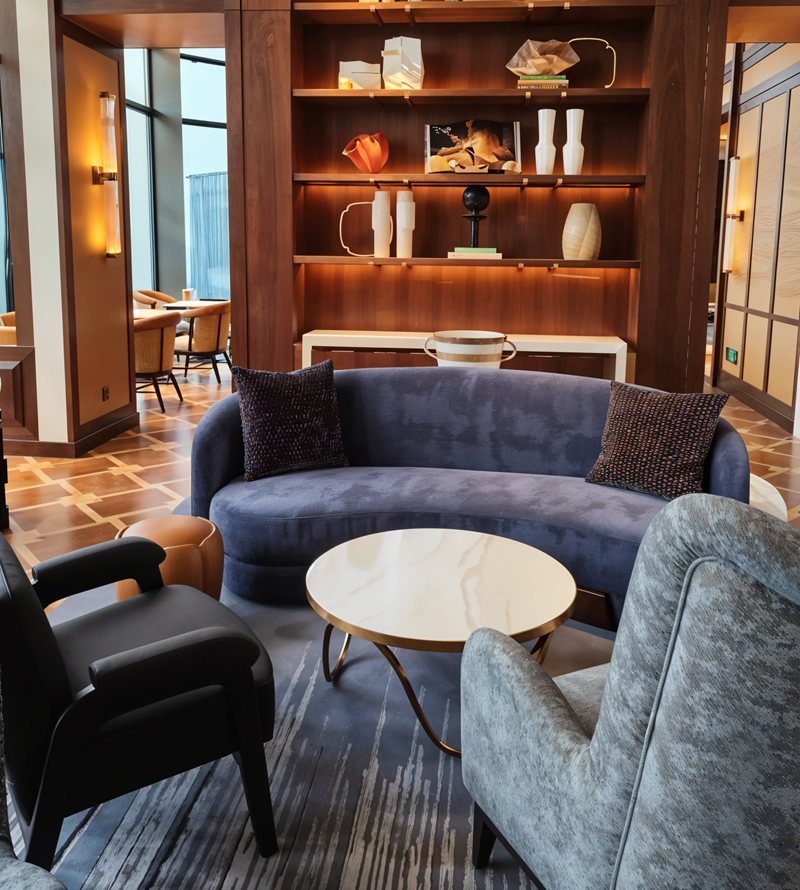
Hotel furniture samples and prototyping are the cheapest insurance in any furniture project — and the step most often skipped in the rush to lock a price. A sample is a small physical proof; a prototype is a full, install-ready room built to the actual spec. Both exist to catch the changes that would otherwise surface during mass production or, worse, during installation, where they cost the most. After more than 25 years supplying loose and fixed furniture to five-star hotels, resorts, and serviced apartments, we treat the prototype as the reference standard every production order is measured against.
What hotel furniture samples actually prove
A material sample proves color, texture, and finish. A prototype proves the whole piece — dimensions, joint construction, drawer glide grade, finish durability, and the fire-certified build-up of every upholstered element. Hotel furniture samples answer "does this look right"; the prototype answers "does this build right, install right, and pass inspection." For a volume order, only the prototype de-risks the things that matter.
The reason sampling is non-negotiable on large orders is leverage. A change requested after 300 pieces are built is a rebuild; the same change caught on the prototype is a drawing revision. The prototype shifts the expensive corrections to the cheapest point in the timeline.
Approve the prototype on build, not just appearance
The most common mistake is signing off a prototype on how it photographs. Approve it on how it is made: the hardware grade, the joint method, the finish system, and the documented fire build-up. Then reference the approved sample in the production purchase order so the factory is measured against the thing everyone agreed to, not against a verbal expectation.
- Build one full guestroom mock-up before mass production.
- Walk it with the brand, operator, and owner together.
- Document the approved build as the production reference standard.
- Release volume only after sign-off, not before.
Choose a manufacturer who prototypes as standard
A manufacturer with in-house casegood, soft-seating, millwork, and joinery capability can build the prototype from the same drawings and the same line that will run the volume — so the sample is genuinely representative. OC International, producing loose and fixed furniture since 1997, builds the prototype as the reference standard for every production order and coordinates the mock-up through one accountable project team.
Review the scopes where prototyping protects the most value: hotel guestroom furniture sets, casegood and soft seating sets, and millwork and joinery.
Types of samples and when each is needed
Hotel furniture samples come in several forms, and using the right one at the right stage saves both time and money. A material sample — a swatch of fabric, a finish chip, a hardware pull — confirms color and texture early in design. A component sample, such as a single drawer or a chair frame, confirms construction. A full prototype, built to the actual spec, confirms the whole piece and the way it installs. Reaching for a full prototype too early wastes build effort; relying on swatches alone too late leaves the expensive unknowns unresolved.
The approval workflow and who signs off
The prototype is only as useful as the discipline behind its sign-off. Best practice is a structured walk with the brand, the operator, and the owner present — or at minimum a documented joint approval — so the approved build is agreed by everyone who will later inspect it. Hotel furniture samples and prototyping fail when sign-off is verbal and scattered: the factory builds to one understanding, the operator expected another, and the gap appears at installation. A single signed reference, referenced in the production order, closes that gap.
OC International builds the prototype from the same drawings and the same line that runs the volume, and treats the approved mock-up as the production reference standard for every order.
Digital mock-ups versus physical prototypes
Digital renderings and shop drawings are valuable for confirming proportion and layout before any wood is cut, and they should absolutely be used early. But they do not prove how a piece is made or how it performs. A render cannot reveal a weak joint, a noisy drawer glide, or a fire build-up that fails. That is the role of the physical prototype, and for a large-volume order it remains non-negotiable. Use digital tools to refine the design; use the physical prototype to de-risk the build.
Using samples to control the budget
The prototype is not only a quality control; it is a budget control. A change caught on the approved mock-up is a drawing revision, while the same change caught after 300 pieces are built is a rebuild that consumes both budget and schedule. Hotel furniture samples and prototyping protect the number you approved by moving corrections to the cheapest point in the timeline, where they cost almost nothing to make.
For this reason, the prototype should be funded as a line item from the start, not treated as an optional extra squeezed from a tight margin. The cost is small against the value it protects, and it gives every stakeholder — owner, operator, brand — one reference to agree on before volume is committed. A project that skips the prototype to save the line usually pays for it several times over in corrections discovered too late to fix cheaply.
The budget protection also extends to the install phase. A prototype that proves the assembly method means the on-site crew works to a known standard, so installation runs faster and the snagging list stays short. The prototype, in other words, is one of the highest-return investments in the whole furniture project — quietly defending both the cost plan and the opening date at once.
Frequently asked questions
Is a material sample enough before volume?
A sample proves finish and color; it does not prove the built piece. For a large order, a full prototype is what de-risks dimensions, construction, and compliance.
Who pays for the prototype?
Terms vary, but the cost is small against the cost of correcting 300 built pieces. Treat it as part of the project budget, not an optional extra.
What if the brand requests a change after prototype?
A change before volume is a revision; after volume it is a rebuild. The prototype exists precisely to surface those changes early, when they are cheap.
How many rounds of samples are normal?
Usually one material round early, then a single full prototype before volume. More than that often signals an unclear spec rather than a difficult product.
Who should attend the prototype walk?
The brand, the operator, and the owner together, or a documented joint approval. The goal is one signed reference everyone agrees to, referenced in the production order.
Can we reuse a prototype across room types?
Partly. A prototype proves the build system — construction, hardware, finish — which often carries across similar pieces, but each distinct design still needs its own approval. The mock-up is a reference, not a blanket pass for every item.
What happens to the prototype after sign-off?
It becomes the production reference, retained and compared against the first articles off the line. Many operators keep it on site as the benchmark the install crew measures against.
Is a virtual prototype enough?
For layout and proportion, renderings help early; for build quality and performance, the physical prototype remains necessary. Use digital tools to refine the design, then prove the build with a real piece before volume.
In short, hotel furniture samples and prototyping move the expensive corrections to the cheapest point in the timeline. Approve the prototype on build quality, document it as the reference, and release volume only after sign-off — and the large order arrives as specified instead of as a surprise.
Why global hospitality teams work with OC International
OC International (OCI) has manufactured loose and fixed furniture for five-star hotels, resorts, and serviced residences since 1997. From our manufacturing base in Dongguan we support owners, developers, design firms, and FF&E consultants across the Americas, the Middle East, and Asia with one accountable team covering design development, production, quality control, packing, shipping, and on-site installation.
What our manufacturing base delivers
- In-house casegoods, soft seating, millwork and joinery under one roof — one specification, one documented quality system, one point of accountability.
- Builds engineered to the fire-safety and emissions standards your market requires — CAL 117, CAL 133, TB 133, EN 1021, BS 5852, FSC timber, and CARB P2 — under an ISO 9001-controlled production process.
- Prototype-to-volume discipline: a signed guestroom mock-up is the reference standard every production order is measured against.
- Coordinated logistics and installation that keep multi-room-type properties on a defined delivery sequence and a protected opening date.
Selected delivered projects
Our furniture has been delivered to landmark properties including the Fairmont Austin, Four Seasons Chicago, Sheraton Dhaka, Marriott Sydney, Conrad Los Angeles, and Hilton DoubleTree projects across multiple regions — each specified to the operator's brand standard and installed to opening.
Ready to de-risk your volume order with a prototype?
See prototype-ready furniture scopes Request a mock-up planYour email address will not be published. Required fields are marked *